The Devon Experiment That Could Plunge Britain Into Darkness
In the Telegraph, Lauren Shirreff reports that Exeter is switching off its street lights to save money and the planet – but locals say it feels like a nightly curfew, with women in particular feeling unsafe getting home. Here’s how her article begins:
“It’s like having a curfew,” says Rose Lelliott, 23. Outside her flat, on a quiet road in Exeter – the sort of place you’d imagine your mother would encourage you to live, were you a young woman moving away from home for the first time – the street lights that once guided her way to the local train station are all either broken, working at half-power or permanently snuffed out.
Lelliott commutes to London once a week, where she works as a researcher at the House of Commons. To make the train for her 9am start, she has to be out the door by 5.15am, but the streetlamps along her road are turned off between 12.30pm and 5.30am. After 9.30pm, they’re dimmed to just 40% of their usual power.
Lelliott used to make the 20-minute journey on foot, “but I wouldn’t chance it now”, she says. So she spends £9 each way on taxi fares, on top of the cost of her return ticket. “I’m having to pay because I don’t feel safe,” she says, “but I’ve also heard from a woman who’s given up her job completely because she was doing shift work. She had to choose between financial independence and her own safety.”
This is a student city, but for many women here, a night on the town is now out of the question.
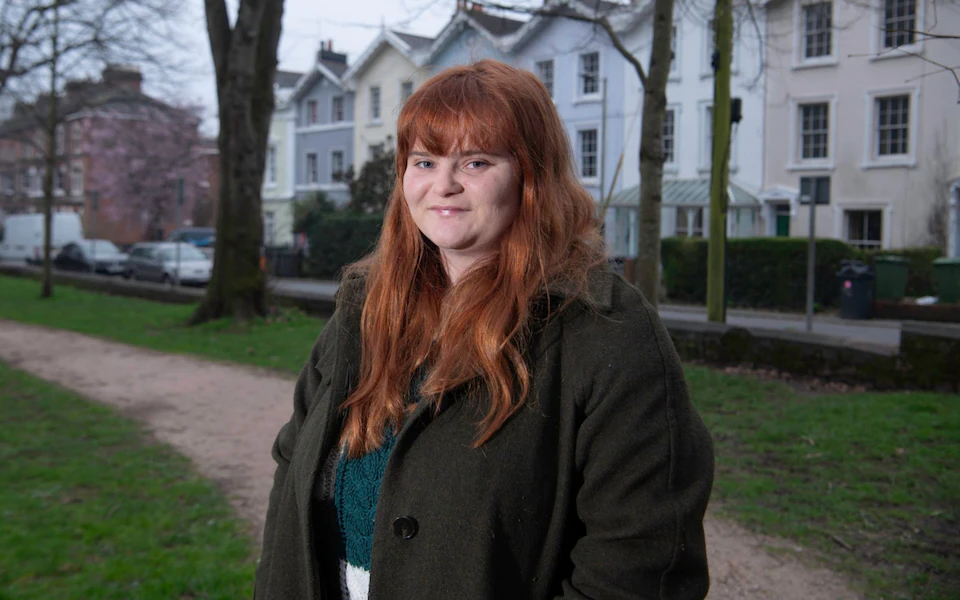
Rose Lelliott’s petition against the council’s street lighting cutbacks has received more than 1,500 signatures
Devon county council announced it was launching a trial of street lighting cutbacks at the end of 2024. “I started campaigning against it as soon as I heard about it, because I was really worried about the impact of poor street lighting for women and girls,” Lelliott says. It was announced this February that the changes would be made permanent. “I was just so frustrated. It really felt like the concerns of people living in the more urban parts of Devon, like Exeter, weren’t being taken seriously.”
A week later, Lelliott set up a new petition, calling for the council to hold off on its decision until it consulted women living across Devon on their views. It has already received more than 1,500 signatures, which Lelliott says would make it the largest that the council has ever received. Even the introduction of low-traffic neighbourhoods in Exeter in a 2023 trial did not stir so many locals to complain, she notes.
Well-lit streets are among the most basic of things we expect our councils to provide in return for the taxes we pay them, along with timely repairs to potholes (clearly amiss in Exeter too, judging by the state of the roads) and consistent garden waste collection (a privilege for which people living in the city pay an extra £50 a year, on top of their regular council tax bill).
Yet a growing number of councils across Britain are quietly scrapping night-time lighting. In Callington, Cornwall, the lights go off at midnight and only come back on at 5am, which is also the case in parts of Coventry and Yorkshire. So desperate is Britain’s financial predicament, it seems, that many councils can no longer deliver the bare minimum. Even Dan Thomas, who sits on Devon county council as a Liberal Democrat, and is responsible for looking after the highways and the street lights along them, will admit to that.
“Cost is undoubtedly a part of the mix,” he says. The permanent move has spread the outages across the whole of Devon, aside from a few small areas run by different unitary authorities. This makes Devon the biggest test case yet for similar policies that could be rolled out across the country. The lights go out slightly earlier in the less urbanised parts of Devon, staying on for slightly longer in Exeter than elsewhere, which Thomas says will keep Devon’s streets safe and fit for purpose. Across the entire area overseen by the council, Thomas says, the measure will save “£6 million annually, which is far from a drop in the bucket”.
Where will the money go? “The reality is that over the last 20 years or so, most available money that’s been floating around has been subsumed into adults and children’s services,” says Thomas. “Obviously, social care is such a demand-led and expensive part of what every council does these days.”
In our part of the Home Counties, the street lights in side roads go off I think at midnight (I am never up to see it). It seems like a sensible use of resources to me, and I like proper darkness at night. I wound be happy for them to be switched off earlier. Most people where I live seem to carry torches or use their phones as it’s quite rural in parts. I appreciate the drawbacks and that others may have a different view. Motion sensor lights seem like a sensible compromise.
Streetlights?? What are they?? There are none where I live and there are no footways either but if you are walking back home from the station after getting beered up, there is virtually no traffic either. Around the station there are streetlights with motion sensors that bring them back up to full power but they are not out.
I realise it isn’t the point but I wonder why Rose doesn’t just cycle. She’d be at the station in half the time, it’s free, plus you’re generally safer doing that then walking for 20 minutes because if there are any weirdos lurking about they’re typically on foot. I wouldn’t be able to justify paying for taxis both ways when I can just get there via peddle power in a jiffy. I’d maybe splurge on a taxi if the weather was bad.
Exeter is very hilly. Its challenging cycling. Cycling requires a bicycle, so it isn’t free, plus she has to decide whether to leave it at Exeter Station or take it with her on the train. All of this sounds like hard work really, when the Council have a long accepted duty to light our streets at night. They can blame increase social demands, but what are they there to do.? I feel this most keenly when I see citizen groups doing litter picks. We pay the council to do it, and we aren’t exactly short of fit young people on benefits to be given a bag and a picker to go and do it instead.
I used to cycle to work, through London, but I grew tired of the constant aggravation from pedestrians, cyclists, scooterists, cars etc etc, as well as not really feeling that safe in traffic any more. Our roads are not really meant for bikes. Where I live now, when I was commuting to London I cycled to the station – 5 mins instead of 25 walking – but then it’s quiet and lots of paths to avoid roads. You do need to take into account the weather, carrying stuff, hills, but yes I think it’s still the option I would choose if I needed to do that now.
I keep forgetting that England is probably poles apart from the Netherlands when it comes to infrastructure, safety and consideration for cyclists. And the reason motorists are so considerate towards cyclists here is because they themselves cycle, everybody has a bike here and it’s the most convenient way to get around, but also if a driver hits a cyclist they will always be the one at fault, even if they technically weren’t. Cyclists are top of the food chain here when it comes to road users. Kids ride 3 abreast on side streets and nobody beeps their horn, you just drive slowly behind them.
We visited Jersey and I was horrified at the amount of traffic and no room at all at the side to cycle safely, despite it being a lovely place to cycle if you could do so. I think you would be taking your life in your hands cycling in many places in the UK, especially towns/cities. The bike culture would be the thing I missed most if I ever came back. It’s such a pleasure to just leave your house, jump on your bike and go.
I used to love riding, less so now but when the weather is good it is still a fun activity and good way to do certain journeys. But I think our roads are what they are – country lanes and old towns with funny shapes just do not lend themselves to bikes. We do have the abandoned railway lines and the like which can be good if you are near one. I suppose when by-passes get built they could put something next to them for bikes – this does happen sometimes but not often. I am not convinced they’d get used a lot though. Maybe with electric bikes, but for longer journeys the car will always win out.
About 40 years ago it was normal where I live for the street lights to be turned off (except on major roads) about 30 minutes after pub closing time, but that was abandoned later on. However, modern lamps are more efficient now. Back then, sodium lamps were the norm for street lighting.

To join in with the discussion please make a donation to The Daily Sceptic.
Profanity and abuse will be removed and may lead to a permanent ban.
In our part of the Home Counties, the street lights in side roads go off I think at midnight (I am never up to see it). It seems like a sensible use of resources to me, and I like proper darkness at night. I wound be happy for them to be switched off earlier. Most people where I live seem to carry torches or use their phones as it’s quite rural in parts. I appreciate the drawbacks and that others may have a different view. Motion sensor lights seem like a sensible compromise.
Streetlights?? What are they?? There are none where I live and there are no footways either but if you are walking back home from the station after getting beered up, there is virtually no traffic either. Around the station there are streetlights with motion sensors that bring them back up to full power but they are not out.
I realise it isn’t the point but I wonder why Rose doesn’t just cycle. She’d be at the station in half the time, it’s free, plus you’re generally safer doing that then walking for 20 minutes because if there are any weirdos lurking about they’re typically on foot. I wouldn’t be able to justify paying for taxis both ways when I can just get there via peddle power in a jiffy. I’d maybe splurge on a taxi if the weather was bad.
Exeter is very hilly. Its challenging cycling. Cycling requires a bicycle, so it isn’t free, plus she has to decide whether to leave it at Exeter Station or take it with her on the train. All of this sounds like hard work really, when the Council have a long accepted duty to light our streets at night. They can blame increase social demands, but what are they there to do.? I feel this most keenly when I see citizen groups doing litter picks. We pay the council to do it, and we aren’t exactly short of fit young people on benefits to be given a bag and a picker to go and do it instead.
I used to cycle to work, through London, but I grew tired of the constant aggravation from pedestrians, cyclists, scooterists, cars etc etc, as well as not really feeling that safe in traffic any more. Our roads are not really meant for bikes. Where I live now, when I was commuting to London I cycled to the station – 5 mins instead of 25 walking – but then it’s quiet and lots of paths to avoid roads. You do need to take into account the weather, carrying stuff, hills, but yes I think it’s still the option I would choose if I needed to do that now.
I keep forgetting that England is probably poles apart from the Netherlands when it comes to infrastructure, safety and consideration for cyclists. And the reason motorists are so considerate towards cyclists here is because they themselves cycle, everybody has a bike here and it’s the most convenient way to get around, but also if a driver hits a cyclist they will always be the one at fault, even if they technically weren’t. Cyclists are top of the food chain here when it comes to road users. Kids ride 3 abreast on side streets and nobody beeps their horn, you just drive slowly behind them.
We visited Jersey and I was horrified at the amount of traffic and no room at all at the side to cycle safely, despite it being a lovely place to cycle if you could do so. I think you would be taking your life in your hands cycling in many places in the UK, especially towns/cities. The bike culture would be the thing I missed most if I ever came back. It’s such a pleasure to just leave your house, jump on your bike and go.
I used to love riding, less so now but when the weather is good it is still a fun activity and good way to do certain journeys. But I think our roads are what they are – country lanes and old towns with funny shapes just do not lend themselves to bikes. We do have the abandoned railway lines and the like which can be good if you are near one. I suppose when by-passes get built they could put something next to them for bikes – this does happen sometimes but not often. I am not convinced they’d get used a lot though. Maybe with electric bikes, but for longer journeys the car will always win out.
About 40 years ago it was normal where I live for the street lights to be turned off (except on major roads) about 30 minutes after pub closing time, but that was abandoned later on. However, modern lamps are more efficient now. Back then, sodium lamps were the norm for street lighting.