
The Real Story of Gorton is Empty Ballot Boxes
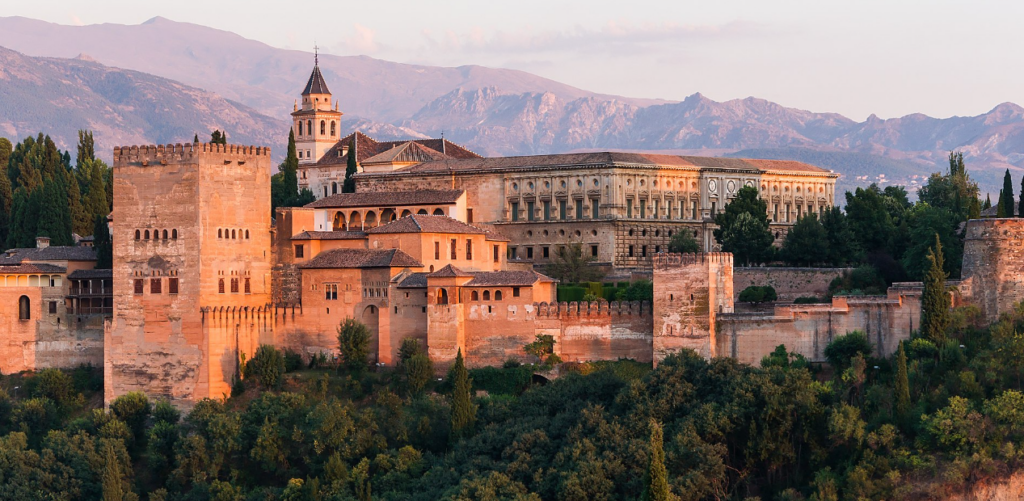
I am writing this from Granada. Out of my window sits the Alhambra, glowing in the Andalusian sun. A reminder that history has teeth.
It was built at the height of Islamic power in Europe. A civilisational statement in stone. Geometry, poetry, water, order. Then the tide turned. Catholic Spain pushed south. The Reconquista ended. The Cross replaced the Crescent. History moved.
Empires rise. Civilisations compete. Cultures dominate, then retreat.
Which brings us, improbably, to Gorton and Denton.
Last week wasn’t some glorious Green triumph that will go down in the political history books. In fact I suspect the UK Green movement will go the same way as Greta Thunberg: a burst of teenage certainty followed by adult irrelevance.
The real story in Gorton and Denton is not the Green victory, but the collective yawn. Turnout limped to 47.6%, indistinguishable from the last General Election, which now passes for respectable. More than half the constituency said “sod your politics” and declined to participate in the great democratic ritual.
Run the numbers and it looks even thinner. The newly elected ‘representative’ commands the active support of roughly one in five adults in her patch. That is not democratic legitimacy. It is arithmetic masquerading as authority – otherwise known as electoral larceny.
This is a symptom of terminal political ennui. For decades those in charge have hollowed out politics so completely that the very idea of democratic legitimacy is now a comedy sketch.
For generations Britain has told itself a comforting story: that liberal democracy is culturally neutral. That it floats above religion, heritage, historical memory. That you can dilute the cultural foundations of a society and the political structure will remain untouched.
It won’t.
Democracy is not just ballot boxes and boundary commissions. It rests on cultural assumptions forged over centuries: that the individual stands above the tribe. That guilt and innocence are personal, not inherited. That the same law binds ruler and ruled. That government is constrained because power is dangerous. That speech, even offensive speech, is preferable to enforced silence. That conscience is sovereign. That women are autonomous civic actors, not extensions of fathers or husbands. That religious belief is private but civil law is supreme. That citizenship overrides ethnicity.
Those assumptions did not emerge from nowhere. They are rooted in the long, messy evolution of Judeo-Christian Europe, filtered through Enlightenment rationalism and the gradual separation of church and state. You can dislike that history. You can mock it. But you cannot deny that it produced the democratic architecture and economic bounty of the post-war period we now take for granted.
When politicians chase votes in religious enclaves while preaching progressive virtue to everyone else, they are trying to square a circle with a crayon. You cannot sell rainbow absolutism on Monday and quietly harvest votes from people who think it is sinful on Tuesday without tearing the fabric.
To add satire to the pathos, the victorious Green declared: “My Muslim friends and neighbours are just like me. Human.” Quite so. Yet democracy rests not on shared DNA but on shared allegiance to secular law and cultural DNA: on equality of women and the supremacy of Parliament – principles Islamism pointedly does not recognise let alone appreciate. Which makes the irony of a female candidate invoking it rather rich and illustrative of how deep their naïveté and cognitive dissonance runs.
When that cultural consensus weakens, democracy strains. Culture drives politics. Not the other way round.
Look at Denmark, arguably the clearest European example of a centre-Left country deciding that multicultural drift had gone too far. The Danish Social Democrats, hardly a Right-wing outfit, adopted some of the strictest immigration and integration policies in Europe. Ghetto laws. Welfare restrictions tied to integration. Tougher asylum rules. Direct language about social cohesion.
The Danish calculation was brutally pragmatic. High trust societies cannot function if parallel communities evolve with different legal or cultural expectations. So the country tightened policy – not because Denmark ceased to be democratic, but because it wanted to remain so.
Which brings us back to Gorton.
When voting patterns begin to track cultural identity rather than shared civic interest, democracy becomes arithmetic. And arithmetic politics is brittle.
The polling breakdown circulating online shows sharp divergence along tribal lines: Reform polling strongly among white voters, Greens and Labour stronger among ethnic minorities and progressives.
Herein lies is the danger.
Politics in the UK today feels like a dreadful pantomime. The fault lies squarely at the feet of the so-called Establishment. Labour and the Tories have spent the last 20 years trading seats and watering down ideas until voters stopped believing that either party has anything to offer. No wonder people looked at the ballot paper and thought, ‘Nah, I fancy a sofa and Netflix instead.’
Reform meanwhile is in danger of swaggering into British politics as though it is the cavalry, only to discover it’s riding a donkey borrowed from the parish. It has captured the frustration of many former Tory and Labour voters, but it too seems to be on a conveyor belt to becoming just like those it’s replacing. A rag-tag bag of recycled politicians from previous parties can only promise so much. So far, Reform’s great revolution looks like an upgraded version of the status quo with more dramatic rhetoric and fewer policies. It wants to blame ‘sectarian voting and cheating’ for why it didn’t win.
Let’s pause on that for a moment. The idea that electoral malpractice was the decisive factor is, frankly, lazy thinking – though to be fair, the party also blamed sectarianism, which was a significant factor. What is happening in many of our big cities is that old certainties about how people vote have evaporated.
If Reform genuinely want to be serious alternatives to the establishment, it has to do more than bellow soundbites into television cameras. It has to present genuinely revolutionary, thoughtful original policies. It has to bring new blood. People not born and bred in the political class, but thinkers, doers and successful outsiders who can make the rest of us sit up and say, ‘Actually yes, that makes sense, I want to vote for that.’
Reform and the Tories also need to understand the math, as the Americans say. In a seven-party Britain, no one wins alone. If Reform cares about defending secular law and individual liberty, it will have to work with those who share those instincts. Otherwise it is just another protest vehicle, honking loudly while the road bends away from it.
Which brings me to the heart of the matter. Why have voters given up? Because the country has been run for years by managerial mediocrity wrapped in a cultural blancmange, wobbling earnestly while the foundations crack.
Voters look at politics the way they look at used-car salesmen: with suspicion, derision and a desire to avoid it altogether. You don’t get 52% of the electorate staying at home because they’re ‘enthused by tactical voting’. They stay home because they think it doesn’t bloody matter.
If parties refuse to acknowledge cultural tension, voters drift to those who will. If insurgent parties exaggerate cultural tension into demographic conspiracy, moderate voters recoil.
In both cases, turnout drops. Legitimacy erodes. Governments lean more heavily on executive authority because consent is thin.
That is how democracies become illiberal. Not overnight. Not because Granada once had minarets.
Standing here looking at the Alhambra, you cannot help but notice something. Civilisations do not disappear because they are invaded. They disappear because they weaken internally.
The Nasrid rulers of Granada did not imagine their citadel would one day be a tourist attraction under Christian rule. They assumed continuity.
Britain today assumes that liberal democracy is permanent. That its cultural foundations are optional. That you can replace a shared story with administrative management and everything will tick along.
Gorton suggests otherwise.
When half the country declines to participate, it is not mass radicalism. It is mass resignation.
If Britain wants to avoid authoritarian reflex, whether from Left or Right, it must rebuild cultural confidence without sliding into sectarianism.
The danger is not that the ballot box empties entirely. It is that it narrows. When the broad civic middle disengages, the most organised, the most disciplined, the most tribal inherit the machinery of the state. Democracy survives in form, but it begins to calcify into bloc politics.
If Britain still believes in the Judeo-Christian cultural architecture that made its democracy and prosperity possible then it must defend it with clarity and confidence. If it does not, low turnout will not produce silence. It will produce capture.
No culture, however proud its monuments and history, endures for long once the people who built it withdraw from defending it.
Clive Pinder is a recovering global executive, former elected ornament and reluctant chronicler of Britain’s cultural and institutional drift. Find him on Substack.
To join in with the discussion please make a donation to The Daily Sceptic.
Profanity and abuse will be removed and may lead to a permanent ban.
Your criticism of Reform is highly selective. You demand detailed policies from them three years ahead of a scheduled election whereas the other parties have incoherent aspirations alone.
The Uniparties’ policy statements are in any event worthless. They have so often done the opposite and even introduced dramatic policies not foreshadowed at the election.
Reform is setting out broad policy directions and values. It has discussed some policies in detail. It would be a tactical error for it to rush out details now or even to publish them like a shopping list at the election.
I realise Tory adjacent journos and those with little to say want Reform policies do they can attack them. It isn’t playing that game.
and no it isn’t joining the discredited old parties just because it has recruited a few of their elected or former important members. Do newspapers adopt the style and policies of those from whom new journos are recruited – no. It is the editor who sets the style.
I agree
While I have serious reservations about Reform, they currently represent the only serious alternative to what we’ve had for a long time
They may disappoint gravely if given the opportunity to govern, but I think they deserve a chance
Broadly speaking anyone who did not vote for them in the recent by-election is saying they are happy with the status quo – including those that did not vote
The writer seems to be suggesting a pact with the Tories. Seems like madness to me. They have shown they cannot be trusted and they seem politically irrelevant to me now – full of the deluded or of Lib Dems in disguise. Rather than advising Reform to reach out I suggest the author advises any remaining Tories to do one or get off the pot
Democracy includes not voting. Some may do it out of high principles because they think all the parties are terrible. Many are just lazy/not interested/think it doesn’t matter. That is just as much a choice as voting
Thanks for reading the column. If your takeaway was that I am not advocating for voters to return a ballot, the clue was meant to be in the title ‘The Real Story of Gorton is Empty Ballot Boxes’.
Thanks for writing it
That wasn’t my takeaway
I’d like people to vote for some party that will radically restrict the power of “democracy” but that’s not going to happen
My point is that lots of people have to be assumed to be happy with the status quo, broadly speaking, or just too dumb to realise what’s going on. Either way, that’s the beauty of democracy
My experience when campaigning and now commenting on politics in the UK and U.S. is that the ‘blob’ (political and bureaucratic class) have deliberately numbed voters into a state of ambivalence and a sense of irrelevance. It’s a subconscious deliberate act on their point. The last thing politicians and bureaucrats want is an engaged electorate. Shame on both houses!
Shame indeed
I do think that “Covid” and also the Trump and Brexit experiences have radicalised a lot of people so perhaps there is some hope. I have found it’s mainly the working class who want radical change. The middle class people I know are mainly stuck thinking that wise people like them know best, and we just need to get the right wise people in charge and everything will be fine.
I agree. Hence my call for fresh faces and radical ideas. This is a turnaround for a country facing financial and cultural bankruptcy. Business as usual will not suffice.
I tend to think that radicalism will only be supported by enough people when there is a truly desperate situation. I don’t think we’re there yet and I am not sure we will ever get there, at least not for a long time. We’re still just too good at stuff, so people are “content” to bumble along. Can you name a rich world country that in recent times has adopted “radical ideas”? Argentina springs to mind, but we’re not Argentina.
Honestly though things are currently so bad, in my view, that I would be dead chuffed if we got a Reform government and it simply stopped piling on the damage, stopped mass immigration, ditched net zero and reduced the tax burden a bit. I would settle for that, for now.
Thanks for this article which hits the nail on the head.
i would add that the depoliticisation of the populace has a lot to do with the way capitalism has developed since the1950s.
Absolutely everything is commodified and we have become consumers first rather than citizens. Nothing is sacred or outside the market.
Of course it matters if people don’t vote because if democracy means anything it means the people or demos do have power to decide the fate of their nation.
“ One of the penalties for not engaging in politics is that you end up being governed by your inferiors.” Plato 423-348 BC
For a minute I thought you were writing from the Granada studios in South Manchester.
Very good 😊
Agree with both of you. The Tories have said they will, in effect, not have any policies until the GE. Its hard to criticise Reform for fleshing out some of their key policies now. They will mature and develop, as the intellectual process continues, and indeed as the situation in the UK develops too. I do find it rather disingenuous to criticise Reform for, at the same time, not having proven operators, and also taking on a limited number of MP’s from other parties. You can’t have both.! I’m pretty comfortable with Jenrick and Braverman as example, of people whose views moved one way as the Tories moved the other. There are many, many people who choose not to vote because ‘it doesn’t change anything’. This is Reform’s biggest challenge to me. Real change against a backdrop of immigration, energy stupidity, loss of manufacturing etc gives very little room for manoeuvre to tackle 30 years of decline in a single parliament.
30 years of decline and much longer of ever more laws, more rules, more taxes, more bureaucracy, less freedom
Don’t you think some new blood is needed? Look at how Trump and Vance have shaken things up! And I am not a fan of Trump the man but you can’t argue with his challenge to the status quo.
I would argue that the current voting system is the main problem. Just look at the number of votes won by each party and the number of MPs that party ends up with.
We need a new voting system. I have advocated this before on this platform.
PR within constituencies.
I would like to preserve the constituency system to make sure that the rural vote counts.
Each constituency then produces let’s say 5 MPs based on PR within that constituency. That way you will end up with more parties, more choice and more chance of finding a party that represents your views. We will have to create larger constituencies, else the number of MPs becomes unmanageable.
This new system will have an higher chance of engaging more voters compared to the current uniparty mash.
You could also introduce direct democracy where constituents can directly influence their MPs vote.
It just requires thinking outside the box.
How about our own version of the Swiss direct democracy system?
Trump succeeds to a certain extent as he’s not a career politician. Maybe that’s the new blood we need in the system to move forward? Nigel to a certain extent, fits that mould too, as does Rupert Lowe.
I’d also suggest that the country looks at compulsory voting, it’s not just the preserve of dictatorships ther are a few democracies practicing it as well.
Couple of problems with that – the government would have to come clean on the real estimated population, vs the pretend lower one they use… also – I can’t see it being enforceable in any practical way. Minimising the postal votes massively to people who really need it would be a positive step in my eyes, vs allowing large groups to do this en masse
Thanks for your thoughts. May I return the compliment. Perhaps you missed my far more critical commentary on Labour, Tory and Greens? Selective dissonance? As for editorial leadership, what revolutionary and unique policies have they promoted outside of immigration, where even leaving the ECHR and revising the HRA is hardly original or unique? Finally, with the next election including 16 year olds, how much would you like to wager than one party, any party, will win a working majority?
The Real Story of Gorton is Empty Ballot Boxes
That’s because 9,000 were postal. Direct from the mosques.
AFAIK the turnout was high for a by-election, in which case the headline here is misleading. The by-election was won by those who do *not* “believe in the Judeo-Christian cultural architecture”.
Three weeks ago
“Reform doesn’t have anyone with high government experience so how can it run a government?”
Two weeks ago
Reform have taken in (not including Zahari who I think was just the catalyst taken in to let the others jump ship) a few of those considered reasonably conservative in nature from the Con Party, with high level Government experience.
“Reform has become the Conservative party!!!”
Seems you can’t win with some people.
1 week ago
Lowe
“Reform are stealing my policies!”
Nope they are just in a strong enough position and the zeitgeist has moved enough to allow some reasonable position clarification. Did anyone think that Nigel Farage, the longest standing and vocal opponent of mass immigration, was going to just abandon any idea of controlling Britain’s borders? Lowe won’t get elected by appealing to the fringe, Reform’s rhetoric is tactical and only sensible.
Lowe will be helpful to the Reform party, he’s making them look more centrist, and making all the bollox ‘hard right’ comparison moot
The SDP (have you heard of them?) might be a more appropriate comparison than Thunberg. But the turnout at that election was comparable to most local authority elections, not a typical high profile parliamentary by-election. Campaign tactics in first past the post with several candidates are fraught with danger, but many intelligent voters that do decide to use their vote often use it kind of negatively, to keep the worst one out from their perspective. E.g. a while back in the Brecon & Radnorshire (as was) in a by-election, many pro-liberals transferred their votes to keep the Tories out, resulting in a Labour MP.
Thank you for that examination and your views on the Gorton and Denton by-election. Complacency, as ever, is the great danger. Many of the commenters here seem to believe that you are too hard on Reform on the basis that they are very young as a party and need time to form potential policies. I disagree. Planning must start on day one, and day one was the day following the last general election. More than that you must be seen to be planning otherwise it becomes a case of ‘what shall we do now then’. Afterall, we have been blessed with a benighted government that had no plans when in opposition and clearly has no coherent plans now that they are in government. They really are a ‘what shall we do now then’ government. I wish Reform well and hope that they do succeed, just as I wish the Conservatives well. I want to see a coherent Right, otherwise the collectivist Left will succeed in their destructive endeavours. The idea that we have another three years or so to prepare for the next general election may not be true, it may come before then. We have plenty of examples where… Read more »
Thank you. We can only hope we don’t have to put up with 4 more years of a Labour Party moving left only to find a fractured right that loses to a left wing coalition. As Sun Tzu wrote ‘Make sure you can’t lose before you try to win’!
“Run the numbers and it looks even thinner. The newly elected ‘representative’ commands the active support of roughly one in five adults in her patch. That is not democratic legitimacy. It is arithmetic masquerading as authority – otherwise known as electoral larceny.”
Same as the GE then. One in five voters voted for Labour
Thanks for reading and good point.
People vote for parties but there is no mechanism for voting against parties. A party might be elected with less than 50% of the vote even if the majority of the voting electorate had not wanted them to represent their constituency.
My radical solution would be to accept that anyone attaining over 50% of the vote would automatically be elected but if no candidate attains over 50% of the vote then there should be a rerun of the election in that constituency between the two front runners. This will assure that the elected representative represents the preference ( if not necessary the view ) of the majority of the voting electorate.
Thanks for reading and I agree that some form of mechanism to ensure democratic legitimacy is required.
We need NOTA – “None of the Above” – to be mandated at the bottom of every ballot paper, and if NOTA wins then nobody takes the seat.
If this was a French election then the dumb blonde would not have won…yet. Failing to achieve a majority of the votes means there would be a second round of voting limited to the three parties with the most votes – a Green/Lab/Reform run off. The other parties votes total less than the Green majority by quite a margin so likely a repeat result? But she would need another 3800 votes to achieve the required majority and then you can throw in that everyone now has a good idea of how things stand given the opinion polls were complete rubbish. You would have to consider some of the non-voters might now be inclined to turn up. One thing the French disgracefully allowed was one of the three remaining parties to withdraw, which was of course done to concentrate the left vote against RN and Le Pen.
Yesterday, in the morning, Reform held a Press Conference and Farage spoke at length about the electoral fraud which was committed in Gorton. He laid out the party’s proposals to restrict voting to British (and Irish) citizens; to reform the postal voting system and ensure that the practice of so-called family voting is stopped.
Yesterday, in the afternoon, Badenough held a Press Conference talking about proposals which she thinks will restore “British values;” a sense of nationhood and shared endeavour ….. amongst the millions of immigrants, disparate “communities” and ethnicities which they are equally responsible for importing over the past 30+ years. No policies as such …. waiting for a Report which will be produced in time for the Party Conference.
It seems to me that the Treacherous Tories are using Reform as cover as they try to move Right and ditch the BluLbour disaster they imposed during the last 14 years.
48% turnout was actually quite a good percentage for a by-election when the Governing Party has an unassailable majority. I expect it will increase at the General Election.
Personally I find this article rather patronising and offensive, people haven’t given up because they dont believe it makes any difference, people have given up because of exactly the suspicion around the Gorton/Denton election,that its fixed, and all areas with demographics like that will stay the same, until they get their own candidate in place, by weakening the turn out until just a certain demographic votes, and as more and more end up in that location, it will become what Sir Jim said, colonised,