
How Non-Governmental Organisations (Billionaires) Engineered the Gorton and Denton By-Election Victory
As an analyst tracking the intersection of philanthropic capital, civic technology and electoral processes, I have examined hundreds of campaigns across multiple jurisdictions. Few cases illustrate the transformation of localised democracy into a professionally orchestrated operation as clearly as the Gorton and Denton by-election held on February 26th, 2026.
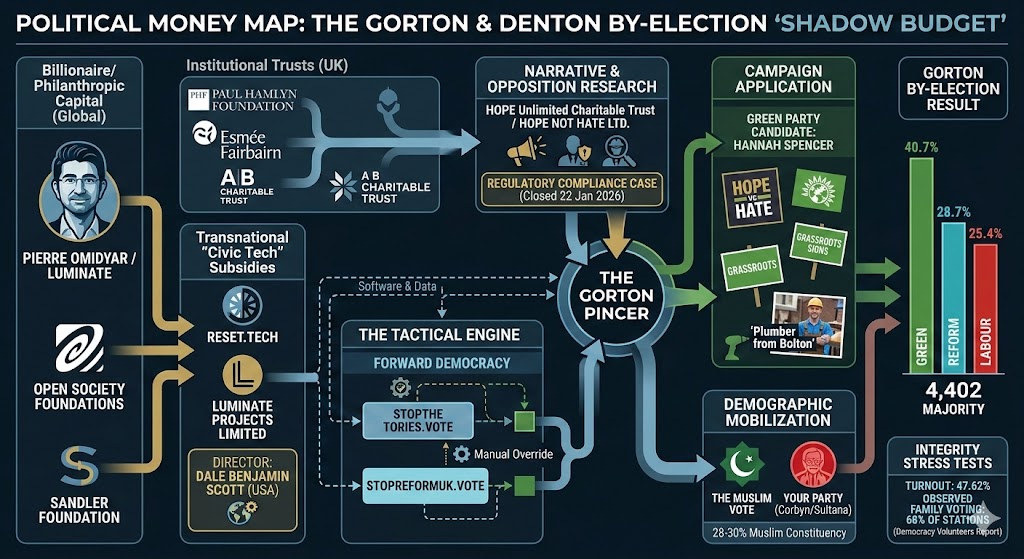
Hannah Spencer, a 34 year-old plumber and Trafford councillor running for the Green Party, secured 14,980 votes, or 40.7% of the total, defeating Reform UK candidate Matthew Goodwin in second place with 10,578 votes and pushing Labour into a distant third. The majority of 4,402 votes represented a historic first: the Green Party’s inaugural Westminster by-election win and its first parliamentary seat in northern England. Yet beneath the surface narrative of grassroots revolt against the Labour Government lay a sophisticated four-vector intervention.
A coalition of non-governmental organisations, subsidised by transnational philanthropic networks, deployed data infrastructure, narrative branding, demographic targeting and parallel mobilisation that operated outside conventional party spending limits and regulatory oversight. This operation, which I term the Gorton Pincer, did not merely influence the result – it redefined how electoral outcomes can be engineered in low-turnout environments under first-past-the-post rules.
The by-election took place in a constituency with an electorate of 77,501. Turnout reached only 47.62%, creating the precise conditions in which highly motivated, externally coordinated blocs could dominate.
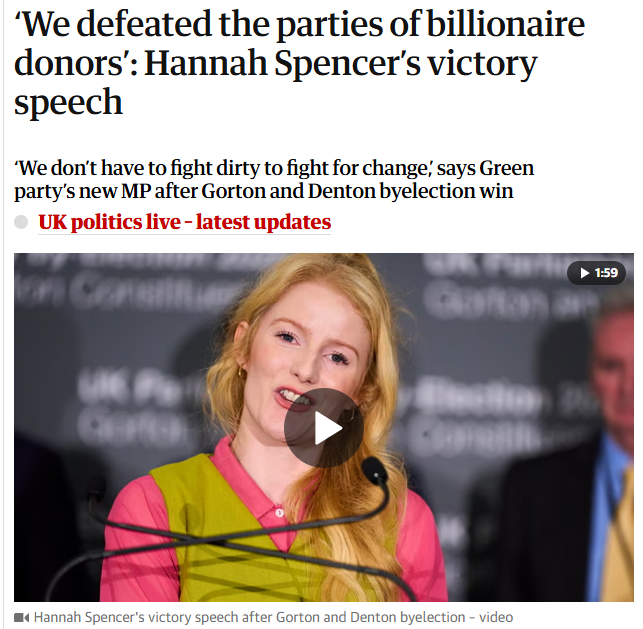
Spencer’s victory speech on February 27th framed the result as a triumph over “the parties of billionaire donors”, with Green leader Zack Polanski echoing that the party represented funding from ordinary people alone. This messaging contrasted sharply with the documented funding trails and operational subsidies that enabled the campaign’s decisive edges. Open-source mapping reveals a parallel campaign economy funded by major philanthropic trusts that dwarfed official party expenditures while evading the transparency requirements applied to registered political parties.
The first vector centred on technical infrastructure and data-driven tactical voting.
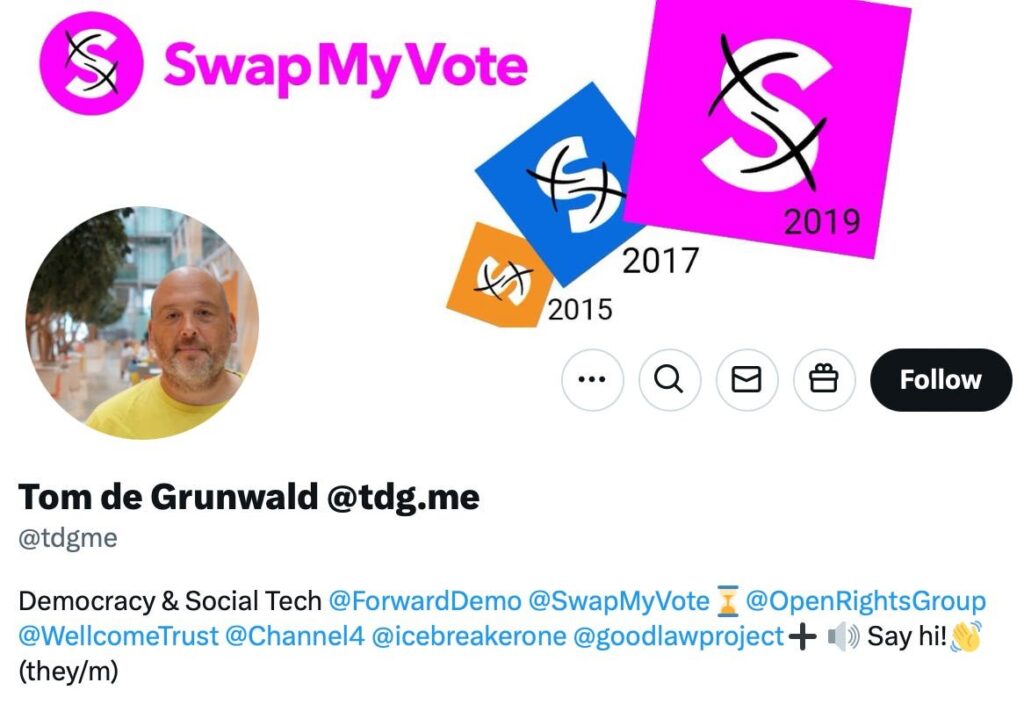
Forward Democracy, led by digital strategist Tom de Grunwald, provided the operational backbone. On February 24th, just 48 hours before polling, the organisation published a bespoke Opinium poll conducted in partnership with Byline Times.
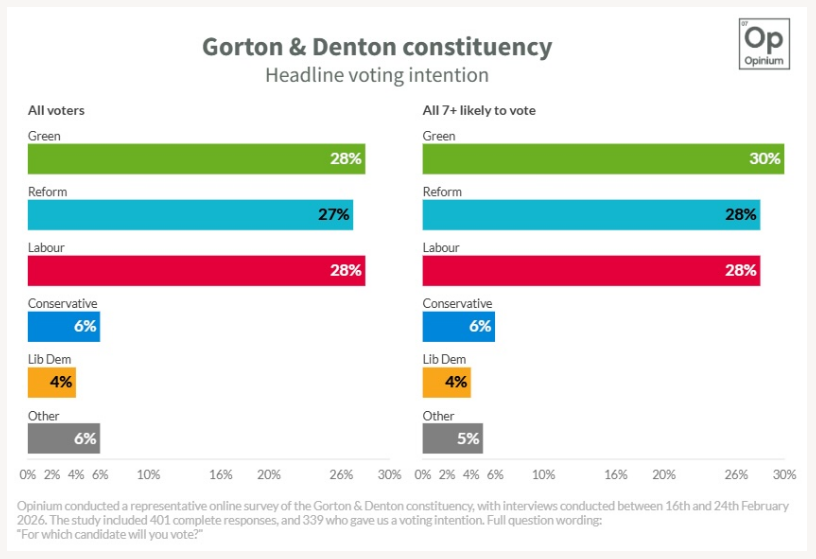
The survey quantified a critical reluctance gap: Green voters proved far less willing to switch tactically to Labour than Labour voters were to support the Greens against Reform UK. Armed with this dataset, Forward Democracy issued manual overrides on its platforms StopTheTories.vote and StopReformUK.vote. These sites, which claimed regional traffic exceeding 25,000 users in Greater Manchester, directed anti-Reform votes explicitly toward Spencer. Such high-trust, last-minute interventions require professional-grade server capacity, data modelling and user-interface security. Crowdfunding alone cannot account for this capability.
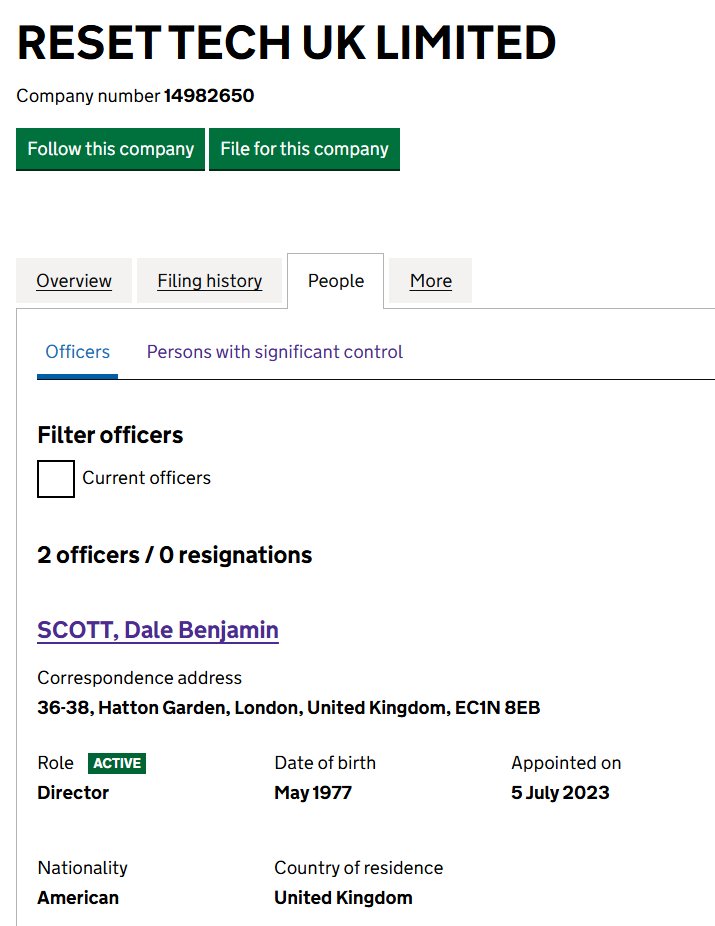
The key subsidy link traces to Reset.tech, a grant-making entity specialising in information integrity. Reset functions as a project of Luminate Projects Limited, wholly owned by the Luminate foundation established by eBay founder Pierre Omidyar. Companies House records confirm that Dale Benjamin Scott, a US national born in May 1977 with documented ties to the Aspen Institute and broader digital-policy networks, serves as active Director and Person with Significant Control of RESET TECH UK LIMITED. This American-led UK entity supplied the civic-tech ecosystem that incubated Forward Democracy’s tools, enabling a 48-hour pivot that funnelled thousands of tactical votes in a seat where every margin mattered.
The second vector involved narrative control and moral framing. Hannah Spencer ran under the explicit branding “Hope versus Hate,” a phrase trademarked for her campaign that mirrored the longstanding slogan of HOPE not hate. This alignment nationalised a local contest, transforming it into a referendum on extremism rather than constituency issues.
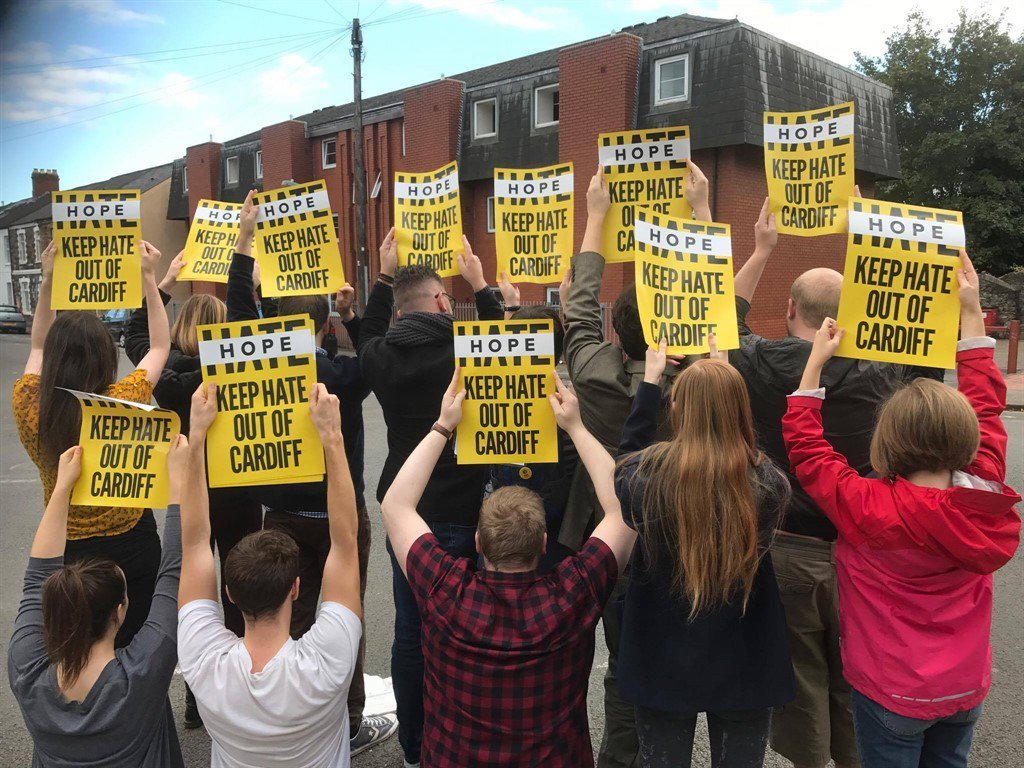
HOPE not hate amplified material highlighting Goodwin’s own 2011 academic work on far-Right extremism, originally produced for Searchlight, the precursor organisation. The narrative portrayed his Reform UK candidacy as a personal betrayal, resonating powerfully in a diverse seat. Yet the infrastructure supporting this branding carried its own transparency issues.
On January 22nd 2026, the Charity Commission closed a compliance case against what was then HOPE Unlimited Charitable Trust, formerly the Hope Not Hate Charitable Trust. Repeated complaints had highlighted insufficient separation between the charitable arm and the political campaigning company HOPE not hate Limited. The regulator criticised the trustees for failing to create clear distinctions, forcing the appointment of three new independent trustees and a full rebrand.
Paul Hamlyn Foundation, along with A B Charitable Trust, Esmée Fairbairn Foundation and others, have provided cumulative funding exceeding £585,000 to the HOPE ecosystem according to GrantNav records. This structure allowed narrative dominance financed by institutional philanthropy while the candidate publicly denounced billionaire influence.
The third vector delivered demographic precision targeting.
The Muslim Vote organisation issued an explicit endorsement of Spencer and mobilised the constituency’s approximately 28–30% Muslim population through Urdu-language materials, mosque-level organising and digital campaigns framed around dissatisfaction with Labour’s national leadership and stance on international conflicts. This effort detached a traditional Labour voting bloc with disciplined efficiency.
Complementing it, Your Party, associated with Jeremy Corbyn and Zarah Sultana, provided Left-flank legitimacy by endorsing Spencer as the authentic voice of socialist change. Spencer’s victory speech acknowledged this support directly, stating she stood “shoulder to shoulder with our Muslim communities” and describing them as “just like me, working people”. In a low-turnout contest, these coordinated blocs provided the demographic blade of the pincer.
The fourth vector exposed stresses on electoral integrity.
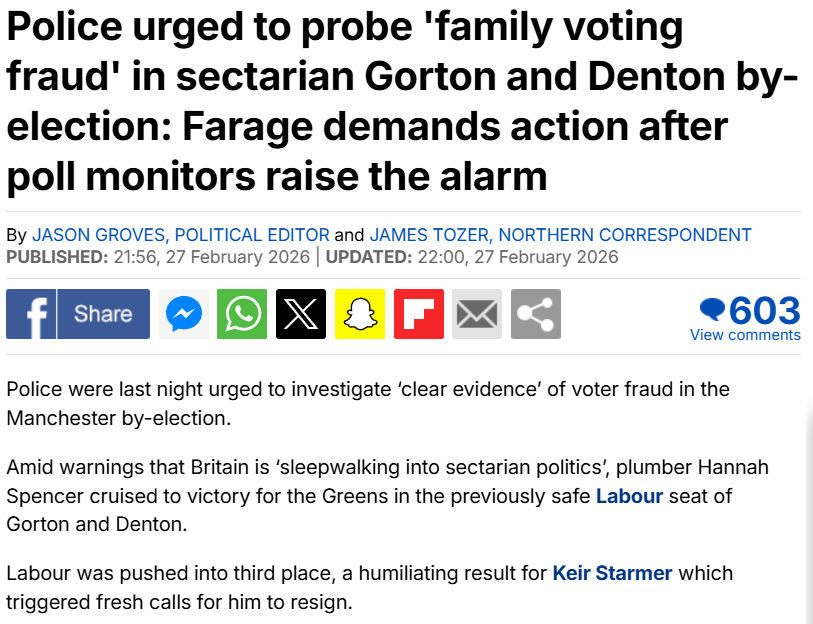
Democracy Volunteers, an independent observer group, monitored 22 of the 45 polling stations. They documented family voting, the illegal practice of multiple voters sharing booths and directing choices, in 15 stations, representing 68% of those observed. Across a sample of 545 voters, they recorded 32 discrete cases, affecting roughly 12% of the sample. The organisation described these as the highest levels in its 10-year history. Reform UK immediately filed formal complaints with Greater Manchester Police and the Electoral Commission, citing potential undue influence. While the returning officer noted no contemporaneous complaints from polling stations, the observer dataset now forms the core of ongoing legal challenges. This integrity vector reveals how pincer pressure can strain secret-ballot norms in demographically concentrated areas.
These four vectors converged within a broader transnational subsidy network. Beyond Ben Scott’s statutory role at Reset Tech UK, additional philanthropic capital flowed through the Joseph Rowntree Reform Trust for political grants and indirect support from Open Society Foundations to the wider civic-tech ecosystem. Joseph Rowntree Reform Trust provided crucial non-charitable funding for tactical-voting infrastructure. The result was a shadow budget operating beyond Electoral Commission party-spend caps via non-party actors.
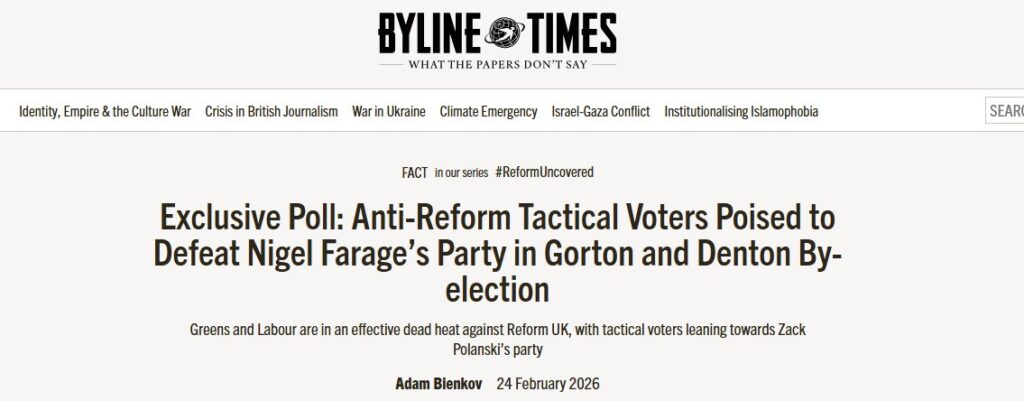
Byline Times, itself adjacent to the same civic-tech networks, jointly commissioned the decisive poll, creating a closed amplification loop from funder to data to voter instruction to narrative outlet.
Quantitatively, the outcome speaks for itself. Spencer secured her seat with votes representing just 19.3% of the total electorate. The 47.62% turnout amplified the efficiency of coordinated minorities while apathetic traditional voters stayed home. The 4,402-vote majority over Reform emerged directly from the tactical override, demographic shift and narrative dominance. Spencer’s personal authenticity as a working-class plumber who still planned to fix “Westminster toilets” if needed provided masterful cover. The institutional machinery behind her, however, relied on precisely the philanthropic capital her rhetoric condemned. This selective definition of “billionaire influence” allowed narrative laundering on a grand scale.
From an analyst’s perspective, the Gorton and Denton by-election does not invalidate the legal result. Voters cast ballots freely within the rules. Yet the operation exposes systemic vulnerabilities that undermine the spirit of localised, party-driven democracy. Non-party actors can now deploy professional data tools, branded narratives, demographic GOTV and transnational subsidies without the disclosure requirements imposed on political parties. Low-turnout contests under first-past-the-post become particularly susceptible to such parallel economies.
The model is replicable in any seat where progressive fragmentation meets a Reform challenge. When a US national directs the UK civic-tech node enabling manual vote overrides, when a regulator-flagged organisation supplies the moral branding and when record family-voting observations coincide with a narrow plurality win, questions about resilience become unavoidable.
Traditional media framed the result as an organic working-class rejection of Starmer or a progressive realignment. Those elements existed. The analyst’s lens does not deny grassroots agency. It quantifies how institutional amplification transformed that agency into a decisive – engineered – margin. The Gorton Pincer stands as the clearest documented case of 2026-style electoral engineering in the United Kingdom. It demands renewed scrutiny of non-party spending loopholes, foreign-influenced civic technology, charitable–political separations and polling-station integrity.
Without such reforms, localised democracy risks becoming a theatre in which the most sophisticated NGO coalition prevails, not necessarily the candidate with the broadest community mandate.
The result is legal.
The precedent is troubling.
CCDHWatch can be found on X where this article was first published.
To join in with the discussion please make a donation to The Daily Sceptic.
Profanity and abuse will be removed and may lead to a permanent ban.
Muslims. 1/3 of the DG pop. 100% turnout (quite something that immutable pattern). If 80 % vote for the low IQ Greentard in a 47% turnout, the blonde tard wins. Simples.
Very informative – thank you for that detailed flowchart of the concealed electoral plumbing that’s propelled Hanna the Spanna directly into the House of Commons’ cesspit.
Any organisation in any jurisdiction which campaigns for one candidate or against another candidate is a campaign organisation. Sounds obvious and it is true.
Unfortunately the Electoral Commission is not interested. All it wants to do is search for reasons to ban or fine Reform and its officers.
A failure to register and report on campaign expenditure in the UK is an offence and should be prosecuted.
The Electoral Commission is totally corrupt. Of course it is – those who wish to manipulate our elections need to buy the people in charge first.
I remember during the Brexit campaign that I worked out a loophole which meant that people who weren’t entitled to vote were able to vote. I knew someone in the Vote Leave campaign who worked for Lord Owen and she passed on my concern. He took it up with the Electoral Commission personally and was TOTALLY IGNORED. Lord Owen!
Anyone can accept a fair defeat, although legal is it within the spirit of the process?
seemingly not, manipulation behind the scenes has occurred, we can’t say for certain that the winning candidate was aware and/or complicit in apparent shenanigans!
An elephant just trumpeted in the corner of my room – Postal Votes???
While we are not yet at US levels of voter fraud only because of our single declaration day whereas the corrupt Democrat states were allowed to print ballots and count them for weeks after. But postal voting is particularly open to muslim fraud with their family system of the patriarch having total power to gather all the voting forms and fill them in after receiving instruction from the imam. How many votes were postal in this election? We have had upstart wins before such as by Galloway who come GE time was booted out but what makes this a bit different I suppose is that the Greens are a national party not a small independent.
Apparently 25% of votes were postal.
A typical by-election, at which the electoral majority did not vote.
Who is this lady plumber?
Is her plumbing background for real, or is it just some cover story?
Has she ever fixed even a dripping tap?
Do we have any verified customers?
Sorry to be suspicious but then again, having been brought up in a communist country, we even had invented historical figures. Made up heroes that never existed.
Sorry but I could not bring myself to read what appears to be an excellent article. Couldn’t face it
The franchise needs to be limited to taxpayers – that would scupper stupid people voting for corrupt people who promise them free stuff.
Totally agree, this would be a wonderful innovation.