
Should we Abandon Liberal Democracy in Favour of the Singaporean Model?
This is an expanded version of my most recent Spectator column.
I was in Australia a couple of weeks ago, having been invited to give the annual oration by the Robert Menzies Institute, and stopped off in Singapore for a few days on the way home. I’ve always been curious about this Southeast Asian city state, having read so much about Lee Kuan Yew, its Cambridge-educated founding father who holds the record of being the world’s longest-serving Prime Minister. When he assumed office in 1959, Singapore was a fading outpost of the British Empire, destined to be swallowed up by one of its larger neighbours. The population was impoverished, illiterate and riven with racial conflict. It had no natural resources and most of its 284 square miles was swampland. Yet by the time Lee stepped down thirty-one years later, it had been transformed into an Asian tiger with the second highest GDP per capita in Asia. Today, it is arguably the most successful, best governed country in the world.
For someone like me, who believes Western liberal democracy is the best system of government – or the least bad, in Churchill’s formulation – Singapore poses a challenge. Lee ruled with an iron fist, exiling political opponents, muzzling the press and introducing severe penalties for low-level antisocial behaviour such as spitting, littering and – famously – chewing gum. Like many post-colonial countries, only one party has been in power since independence and Singapore is dominated by a dynastic ruling family, with the last-but-one prime minister, Lee Hsien Loong, who was in office for 20 years, being Lee’s son. The model put in place by its founder has been described as ‘enlightened authoritarianism’, but it’s not that enlightened. Public caning is still a regular occurrence, a drug trafficker was executed the day before I arrived and homosexuality was only decriminalised in 2023 (although no one had been prosecuted for buggery since 2007).
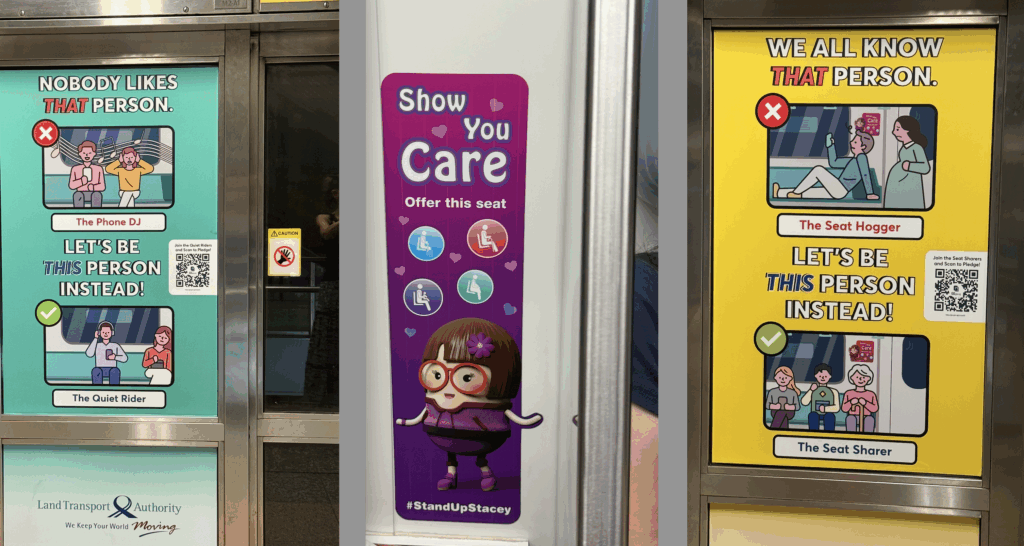
Yet you only have to set foot in the place to realise just how well run it is. In stark contrast to Britain, everything works. It took all of 20 minutes to get to my hotel from the airport, not because it was particularly close, but because traffic jams are virtually unheard of. Cars glide along five-lane expressways, untroubled by bicycle lanes or 20mph speed limits. If you look at the quickest way to get from A to B on Google Maps, buses are often a better option than the subway, although the metro is remarkably clean and reliable. The carriages are decorated with posters featuring smiling cartoon characters telling you how to behave – cute authoritarianism – and among the verboten activities are feet on seats, loud music and consuming food or drink. Hard to argue with that.
Singapore is a low-crime, high-trust society, which is remarkable given that it’s largely made up of different immigrant populations. Lee Kuan Yew put various measures in place to end the racial tensions that threatened to boil over in the 1950s and 60s, the most important of which was to desegregate neighbourhoods. He recognised the dangers of multiculturalism, having seen the damage it had wrought in Britain and America, and worked hard to create a sense of common identity by insisting schools teach children to be proud of their country and introducing national service. It helps that annual growth has averaged about seven per cent between 1965 and 2025, creating a thriving middle class. Widespread home ownership has been made possible by the Housing and Development Board, a state agency responsible for swamp clearance, land reclamation and building tower blocks. Close to 90% of Singaporean housing is owner-occupied, although in the vast majority of cases the state is the freeholder, with leaseholds limited to 99 years.
Like Sir Keir Starmer, Lee boasted of being unburdened by ideology, but to describe him as a ‘technocrat’ would be to miss just how conservative he was. To begin with, he was much more enthusiastic about capitalism than contemporary European leaders who call themselves ‘technocrats’, creating a fiscal regime that made Singapore an extremely attractive place to do business. The highest rate of income tax is 24%, there’s no capital gains tax and his son scrapped inheritance tax in 2008. He was also staunchly anti-Communist, in spite of identifying as a socialist at the beginning of his political career. Yes, he was a pragmatist, but only in the sense of being flexible about how to turn Singapore into a modern, economic powerhouse. (“Does it work? Let’s try it and if it does work, fine, let’s continue it. If it doesn’t work, toss it out, try another one.”) When it came to the ‘values’ he thought should underpin Singaporean society, he went beyond simply promoting those that would create stable conditions for growth and sounded more like a post-liberal conservative.
“Certain basics about society do not change,” he told Fareed Zakariah in a wide-ranging interview for Foreign Affairs in 1994.
Man needs a certain moral sense of right and wrong. There is such a thing called evil, and it is not the result of being a victim of society. You are just an evil man, prone to doing evil things, and you need to be stopped from doing them. Westerners have abandoned an ethical basis for society, believing that all problems are solvable by good government, which we in the East never believed possible.
He thought Singapore’s success was rooted in ‘culture’ – in the Eastern veneration of the family, of values like thrift and deferred gratification, and the willingness of the individual to subordinate his interests to those of his family, community and country. He was an admirer of the British society he observed as a student in the 1940s, but disapproved of our over-generous welfare system, which he thought undermined self-reliance. Consequently, he ensured that education and health, while heavily subsidised, were not 100 per cent free. Social security works differently, too, with employees being able to keep track of their payments in different pots and even use some of the money to put down a deposit on a flat. Margaret Thatcher once remarked that Lee was “never wrong”.
So, Singapore presents a challenge for supporters of the Western democratic tradition. It’s a powerful argument, not just for one-party rule, but for centralised planning – every technocrat‘s dream. In this respect, it’s success is profoundly unhelpful, helping to persuade the Tony Blairs and Ursula von der Leyens of this world that the rule of central planners, unfettered by the preferences of the masses, works best. Yet it clearly doesn’t, with the burgeoning populist revolt in Europe’s three largest economies testifying to that. Would the sclerotic elites clinging on to power in Britain and the EU have fared better if they’d heeded Lee’s warnings about multiculturalism, not allowed welfare spending to balloon to its current levels and reduced taxes? Probably, but I suspect it’s the model itself that’s flawed. After all, the 20th Century is littered with less successful examples of this centralised, authoritarian system of government, from Stalin’s Russia to Mao’s China. The model works in Singapore because it’s a city state and because Lee Kuan Yew was a political genius with a clear-eyed understanding of human nature and a ruthless commitment to economic growth. The test will come when a less gifted successor comes to power – and a new generation of Singaporeans, with social ties eroded by social media, may be less willing to bend the knee to a strongman.
As Aristotle pointed out, the problem with the best kind of rule – a virtuous and wise monarch – is that it can easily devolve into the worst – tyranny. Democracy is more limited and less able to bring about the miraculous transformation of a country in the way that Lee and his successors have managed in less than half a century. But it’s also less risky – much less risky.
To join in with the discussion please make a donation to The Daily Sceptic.
Profanity and abuse will be removed and may lead to a permanent ban.
No thanks, though calling what we have a liberal democracy seems a bit of a stretch.
We are not Singaporean anyway so whatever has “worked” there might well not work here.
Perhaps some public thrashings? Especially for politicians.
Sure.
But such things as not trashing the country in schools and keeping a lid on healthcare costs are no-brainers.
The problem we have is th moral and cultural gulf that has opened up between the governing class and taxpayers who make it all possible.
It’s neither liberal nor democratic, and too monumentally incompetent to be a technocracy.
I think what we have is what socrates would have described as a “total fucking shitshow” and cicero described a similar situation in a memorable address as “an absolute abortion”.
Our problems are not susceptible to a Singaporean solution. The worst of our problems is that we have a deranged ruling class that loathes the native peoples of these islands, and is busy trying to replace them. So far, they have succeeded in replacing the safe, orderly, low-crime, high social-trust society we had up until the 1950s with its exact opposite. And disorder is now shading into accelerating social collapse. This means that the task in front of us is the expulsion of our current rulers from power, and the re-conquest of our country.
Well said.
I completely agree, but my experience was of a more trusting society up until the very early 90s and then it seemed to take a down turn
Because the native population went from 96% to 75% in 30 years. That’s why the downturn happened
Perhaps if we went back to the society we used to have: sovereignty of the individual, self-responsibility, self-reliance, not state-dependent, good manners, Common Law, respect for others, self-respect, self-discipline, industrious, nuclear family as the building block of society cemented by marriage (between man and woman), policing by consent, very limited Government- for example.
It’s what we have to aim at.
Instead of adopting the political arrangements of Singapore, which the Blairites would love to have, except for the capitalism but including the sympathy to China, we need to adopt some of their ways. We need to adopt the ways of various other countries for various aspects of life.
Singapore has developed a remarkably uniform culture despite the several races there, in contrast to the UK where multi-culturalism is encouraged. They deal with low key anti-social behaviour so it does not evolve into bigger problems, whereas here we barely acknowledge the wrongness of littering and bad language in public or shoplifting and street theft, so more serious crime is cconsidered barely open to criticism.
Singapore has also benefited from a longer term approach. If they wanted a bigger airport or an extension to the docks they said so and did it. Here we suggest, hint, open public hearings – and 20 years later nothing has happened.
Liberal democracy appears to have left us.
When you compare Britain and Singapore you aren’t comparing a liberal democracy and a well-run technicracy.
You are comparing a badly run technocracy with a well run technocracy.
If you want a liberal democracy to compare with Singapore maybe you need to pick Norway or Switzerland.
Britain jails people for thought crimes. It enacts major policies that were never put before voters. It disregards the decisions of voters. It arbitrarily suspends people’s constitutional freedoms. It practices racial discrimination by law and in its public policy.
This is no liberal democracy. Claiming we are one doesn’t make it so any more than Starmer claiming we have free speech in Britain means we really do.
You believe we have democracy?
Here’s an example of modern democracy in the UK at the moment!
Nearly 3 million don’t want it, government reply: “We will introduce a digital ID…”
Sorry Toby but democracy is no longer amongst here!
Perhaps this is the sort of rule Trump and Blair want to try their hand at in Gaza. Like an experiment in a Petrie dish, can a concoction of digital ID, real estate management, and benevolent despotism make
Blairthe people rich and peaceful.Quelle surprise, the DS telling us how wonderful totalitarianism is as a possible solution to the UK problems of today.
How many knuckle dragging Turd Worlders does Singpore let in every year?
Great article and food for thought. Ties in with a podcast I listened to yesterday.
open.substack.com/pub/dhughes/p/
jacob-nordangard-externalization?r=ylgqf&utm_medium=ios
This makes for an interesting point of view. I would summarise it as ‘the road to hell is paved with good intentions’. Global control to create utopia is my idea of hell.
Democracy cannot work when you have diversity. Singapore was a magnet for people from the moment it became part of the British empire, and diversity was baked in.
For a counterpart to Singapore and one that shows what happens when this type of dynastic government goes wrong, consider Nicaragua under the Somoza family.