
Will the Oil Price Cap Work?
The G7 countries – the U.S., U.K., Canada, France, Germany, Italy and Japan – have provisionally agreed to impose a price cap on Russian oil. The cap will apply to crude oil from December 5th and refined products from February 5th.
A major reason why Western sanctions haven’t turned the rouble to “rubble”, as Joe Biden said they would, is that Russia has been earning huge revenues in the oil and gas markets – thanks to elevated prices of those commodities. Western countries want to put a stop to this; hence the oil price cap.
But why a price cap? Why not just threaten sanctions against any country that buys Russian oil? There are two reasons. First, other countries – especially China – wouldn’t stand for this. Second, Western countries don’t actually want Russian oil to leave the market. They want it to keep flowing – just at a lower price.
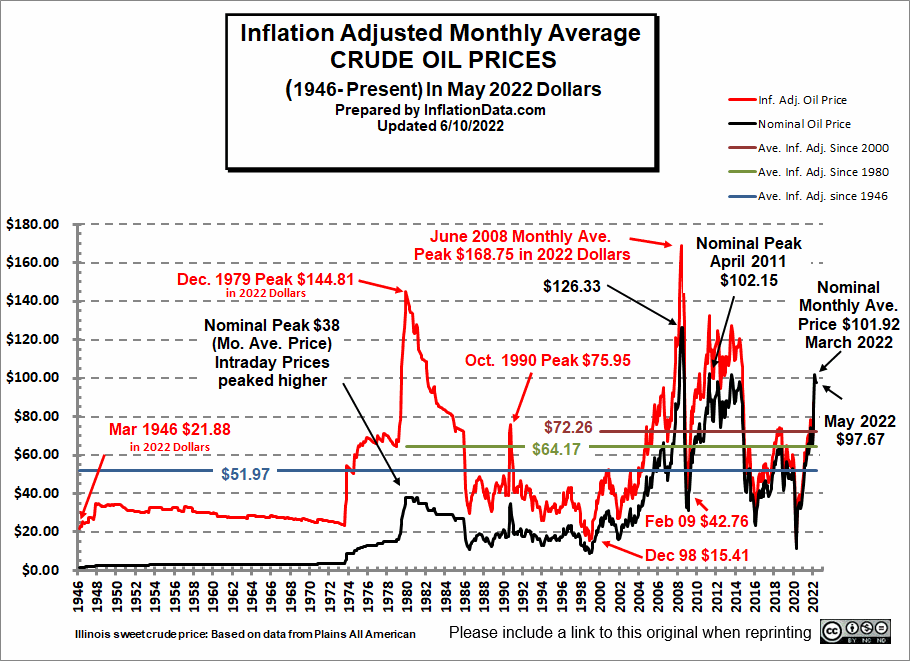
Why is that? If Russian oil left the market, the price of oil would skyrocket. Since the end of the Second World War, the inflation-adjusted oil price has never exceeded $170 per barrel. But if Russian oil was no longer available, it could reach more than twice that level – bringing the world economy to a standstill.
The logic behind the price cap is that the oil price remains relatively stable, but Russia ceases to earn outsize profits. So how will it work?
Western countries actually do have some leverage over Russia when it comes to oil. Much of the shipping and insurance services that facilitate the distribution of Russian oil is based in Europe (shipping in Greece; insurance in London). The plan is to announce that such services will only be available for shipments where the agreed price is below the price cap.
Suppose the market price is $100, and the price cap is set at $50. India proposes to buy a shipment of oil from Russia. Western shipping and insurance services will only be available if India agrees to pay $50 per barrel or less.
Russia has already warned it won’t sell oil to any country that imposes a price cap. But the West is hoping Russia will be forced to comply. After all, shutting down oil wells is expensive and risks scuppering future production.
Now, Russia did manage to cut production during Covid when demand for oil cratered. But proponents of the price cap say it won’t be so easy this time, as Western oil companies have gone and taken their expertise with them. Sceptics, however, say that Russia knows how to manage its own oil industry.
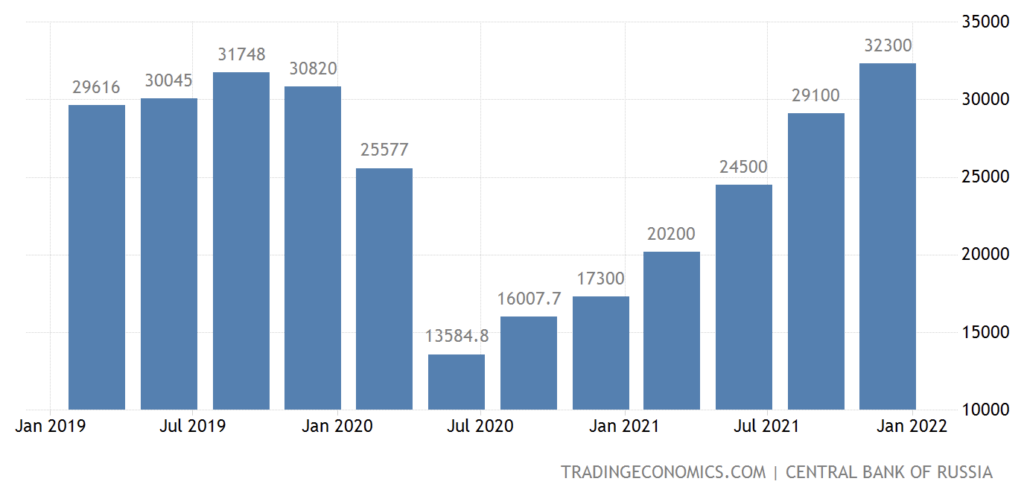
Successfully cutting production would presumably hurt Russia, but by less than you might think. Remember there’s a quantity effect and a price effect. Russia would be selling less oil, but would be earning more money per barrel.
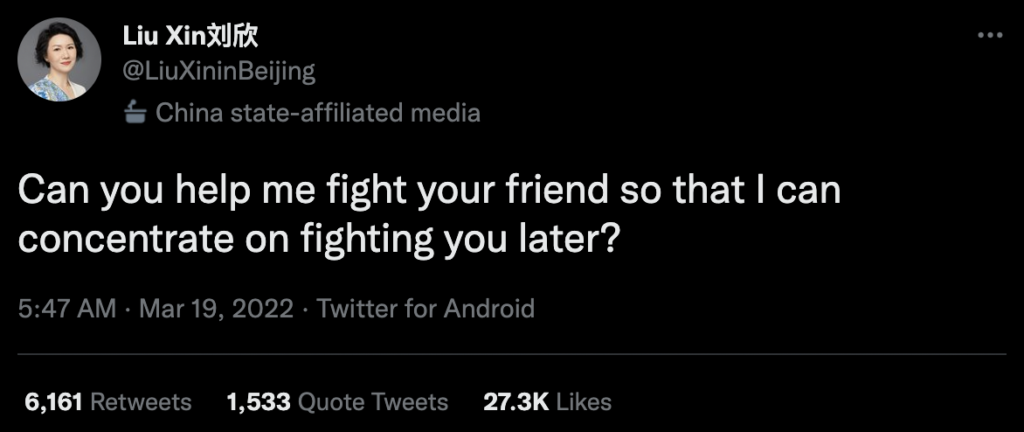
Another possibility is that major buyers like China and India refuse to go along with the price cap. So far, India’s petroleum minister has said he will “look carefully” at the proposal, while noting he has “moral duty” to Indian consumers – not the West. Meanwhile, China’s Foreign Ministry has called for “dialogue and consultation”, which has been taken as lack of support. (That China would oppose the price cap is hardly surprising.)
So how will Russia’s customers get their oil if Western shipping and insurances services aren’t available? Some people claim that tankers can be rerouted from elsewhere, and that Russian or Asian companies can provide insurance. Others claim there’s no enforcement mechanism. What’s to stop a customer paying the price cap, and then making up the difference with a side payment?
Indeed, if the price cap falls well below the market price – which is the whole point – won’t every buyer in the market want Russian oil? Why pay $100 per barrel for Saudi oil, when you can get Russian oil for $50? Buyers will then bid up side payments until the ‘true’ price of Russian oil is close to the market price.
The best-case scenario for the West is that Russia complies with the price cap and side-payments are small.
What seems more likely, though, is some combination of production cuts and alternative distribution channels – which will hurt both Russia and the West. Russia will earn less revenue, and Westerners will pay more for their oil (at a time when Europeans are paying vastly more for their gas).
To join in with the discussion please make a donation to The Daily Sceptic.
Profanity and abuse will be removed and may lead to a permanent ban.
More canutism from our idiot permanent ruling class. It seems the only result of said price cap will be higher costs in the constituencies these ppl purport to represent.
I’m going to guess that the people who think sanctions are working…!? ….Will think the price -cap will work. The problem for the G7 is that I don’t think that they a broad enough coalition to enforce this. Two of the countries, the UK and USA banned oil imports early on..and Japan’s Sakhalin-2 is excluded from the cap….….…….are the rest of the ‘coalition’ big enough importers to make a difference? Russia has made more money in the first part of this year than from the whole of 2021…I don’t know but maybe they’re in a position to sit back and watch as oil gets up to $100 plus, again? Russia has made it clear they will not sell to anyone enforcing a price cap. Their two biggest customers, China and India, will not agree…and China has now agreed to pay entirely in Roubles… There’s also the added squeeze on oil that will be caused by OPEC+ countries cutting production by 100.000 bps, for October. Will they allow continued outside interference on the market? This perhaps best sums up what I see…A tweet from a Bloomberg energy and commodities columnist: “My friends and I have agreed to impose a price cap on… Read more »
The modern day equivalent of one more push against the german trenches.
Pointless senseless, self harming.
Almost as if it is designed to hurt us more than it hurts Russia. And it will probably help India and China in the longer term. It begs the question, are our Governments working in our interest, or someone else’s?
..it does make you wonder… I’m thinking if is it the same as the green agenda and the Covid agenda …..they know they are completely wrong but they have dug holes so deep they can’t/daren’t/won’t admit they are utterly fu***d?
It’s also going to have money at the heart of it…someone will be getting rich….
Btw Alok Sharma is in the new cabinet, enough said, he of the cop26 weeping fame. More of the same.
The West’s feet are riddled with bullets from its own gun.
These fools in charge are dumb. They have no idea how markets work which is why we are all in a ‘not’ recession – like the Norwegian blue it’s just resting – and likely to be in the economic quicksand for a decade.
The Middle East has increased its purchases of Russia oil, which it gets at a discount, to replace its own oil which it consumes, then sells that oil at a higher price thus profit on the open market.
In other words there is always a work around.
Yes..the UAE state oil giant Saudi Aramco saw 2nd quarter profits rise by 90%….according to the IMF the Middle East oil states are in for a $1.3 Trillion ‘windfall’ over the next four years!
Cap That!
As an oil trader I moved, blended and upgraded vast quantities of Russian/Soviet naphtha/gasoil/atres/crude. Sanctions or a price cap are laughable and just another opportunity for profit and creativity. Bureaucrats and politicians simply don’t operate at the intellectual level of the oil industry in general, let alone commodity traders.
The price cap is flat out stupid and has zero chance of working.
Governments can make only modest differences in demand and at great cost as the current sanctions regime has demonstrated. Incremental supply takes years to develop and the coming disaster of this winter will far outpace any supply changes.
There are two obvious solutions but the G7 Governments – all of which have fools as “leaders” – will only choose one.
The first is to impose a forced ceasfire on Ukraine, that will probably come in 8 weeks or less. All that will do is to kick the can down the road for 18 to 24 months.
The second would be to put all net zero mandates, subsidies, tariffs, and regulations on hold for a decade. That would bring immediate relief as at least 30% of all energy costs are net zero surcharges or taxes.
Unfortunately, the G7 fools are so deeply invested in the idea of a Climate Emergency that is neither an emergency nor existential, that they can’t see that there really is an existential problem with is the Energy crisis that they created.